
When to Replace Your AC Unit: Tampa Homeowner’s Guide
Quick answer: The best time to replace your AC unit in Tampa isn't a season, it's before it fails. Home Therapist's team says most homeowners wait until the unit dies in the middle of a Tampa summer, then take whatever price the first available company offers. If your system is nearing 10 to 15 years old, needs frequent repairs, or runs on R22 refrigerant, start getting quotes now. Being proactive protects you from emergency pricing and a house full of hot air in July.
On this page: When is the best time to replace your AC unit in Tampa · What did Home Therapist explain on this Tampa video shoot · What are the warning signs your AC unit needs replacing · How old is too old for an AC unit in Florida heat · What does AC replacement cost in Tampa · Should you repair or replace an aging AC unit · Why does waiting until your AC breaks cost you more · How can Tampa homeowners plan ahead for AC replacement · FAQ
When is the best time to replace your AC unit in Tampa?
The best time to replace your AC unit in Tampa is before it breaks, not while you’re sweating through a 95 degree afternoon with no cool air. That’s the exact point Home Therapist made in a quick video filmed on this topic: wait for total failure and you lose control of the timeline, the price, and who shows up to do the work.
Most homeowners in Tampa Bay treat their AC unit like a light bulb, they run it until it dies and then scramble. The problem is an AC replacement isn’t a five minute fix. When the unit fails in the middle of July, you’re calling around in a panic, taking whatever appointment you can get, and often paying whatever the first available company quotes because you have no leverage and no time to shop around.
A smarter approach is to track the age of your system and get ahead of it. If your unit is 10 years old or older, or you’ve had more than one repair call in the past year or two, start getting quotes now while the system is still running. Getting a free estimate doesn’t commit you to anything, it just gives you information so that when the time comes, you already know your options and your pricing.
There’s a seasonal angle too. Late fall and winter in Tampa Bay tend to be less busy for HVAC companies since the AC isn’t working overtime, so scheduling flexibility is usually better and crews aren’t stretched thin across emergency calls all day. That doesn’t mean summer replacements can’t be done right, it just means cooler months are easier on everybody if you have the choice.
Bottom line: the best time to replace an AC unit is whenever you decide to be proactive about it rather than reactive. Waiting for total failure puts you in the weakest negotiating position possible.
| Video format | 47 second Shorts clip filmed by Home Therapist |
| Core advice given | Replace the AC before it fails, not after |
| Recommended maintenance frequency | At least once a year |
| Risk of waiting cited | No fixed pricing protection during an emergency breakdown |
| Company approach mentioned | Fixed price work quoted ahead of time |
| Homeowner behavior noted | Most clients wait until the unit dies before acting |
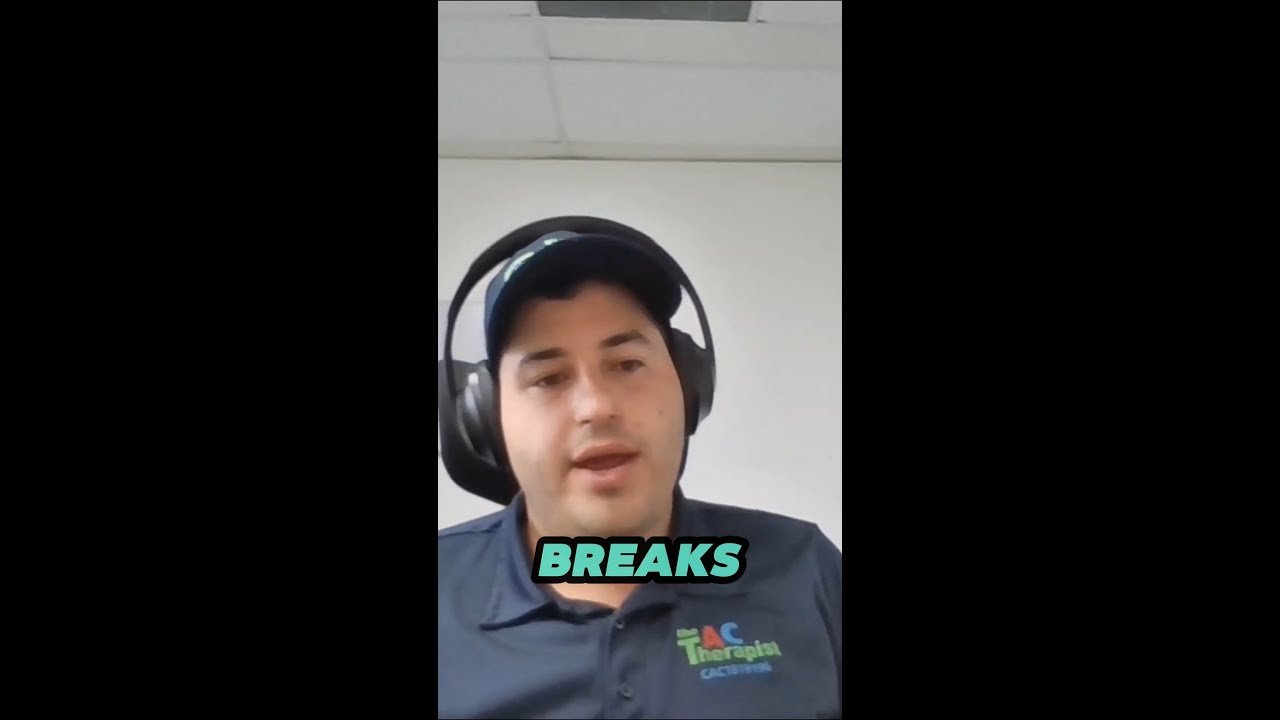
What the video shows
- 0:00 Question posed: what is the best time of year to replace an AC unit
- 0:07 Answer given: the best time is before it breaks, not after
- 0:15 Observation that most clients wait until the last second
- 0:26 Warning that not every company works on fixed pricing
- 0:35 Advice to know your unit's age and keep annual maintenance
- 0:42 Closing advice to get prices early and be proactive
What did Home Therapist explain on this Tampa video shoot?
On this shoot, a Home Therapist technician sat down to answer one question straight: when is the best time of year to replace an AC unit. The answer given on camera was blunt. The best time is when you decide to get ahead of it, not when the unit finally quits on you.
The tech walked through what actually happens with most clients. The majority wait until the very last second. They ignore the age of the unit, skip annual maintenance, and let the system run until it physically cannot cool the house anymore. Then, and only then, do they start calling around for a replacement.
The video makes a specific point about why that habit is risky: not every HVAC company in Tampa Bay works on a fixed price. When a homeowner is sweating in 100 degree heat with no air conditioning, they tend to call whoever answers first and agree to whatever price is quoted, because they’re desperate and uncomfortable. That is not a strong position to negotiate from, and it’s exactly the scenario Home Therapist wants homeowners to avoid.
The recommendation given in the video is simple and repeatable. Know the age of your AC unit. Keep it maintained with at least one professional tune up per year. When you know the unit is nearing the end of its expected life, start getting prices from a couple of companies before anything breaks. That way, when a replacement does become necessary, you’re choosing your installer and your price, not settling for whoever happens to be available that day.
This lines up with how Home Therapist runs its own service calls. The company is built around fixed price work and free estimates, so a homeowner calling in the middle of a heat wave gets the same upfront pricing structure as someone calling in February to plan ahead. The video’s message and the company’s actual business practice point the same direction: don’t wait for the emergency, get informed while you still have a working AC unit to negotiate with.
| Likely cause | Telltale sign | Safe to DIY? |
|---|---|---|
| Unit older than 10 to 15 years | Frequent breakdowns, rising energy bills | No, needs professional evaluation |
| R22 refrigerant system | Nameplate lists R22, refrigerant repairs quoted high | No, requires licensed technician |
| Failing compressor | AC blows warm air, loud clunking from outdoor unit | No |
| Repeated repairs within a year | Multiple service calls, rising invoices | No |
| Rising electric bills despite normal use | Bill creeps up each summer with same habits | Homeowner can track bills, diagnosis needs a tech |
| Uneven cooling or short cycling | Hot spots in the house, system cycles on and off fast | No |
| Corrosion or leaks on outdoor condenser | Visible rust, oily residue, refrigerant lines wet | No |
What are the warning signs your AC unit needs replacing?
A few clear signs point toward replacement instead of another repair: age, repair frequency, refrigerant type, rising bills, and inconsistent cooling.
None of these signs by themselves always means replace, but when a couple of them show up together, it’s time to at least get a professional opinion instead of guessing. Here’s what to watch for around the house:
- Your system is 10 to 15 years old or older, especially if it’s original to the house.
- You’ve called for repairs more than once or twice in the last 12 to 24 months.
- The nameplate on the outdoor unit lists R22 refrigerant, an older refrigerant that’s been phased out and is expensive to service.
- Your electric bill keeps climbing even though your usage habits haven’t changed.
- Some rooms stay hot while others stay cold, or the system runs constantly and never seems to catch up.
- The unit is making grinding, clunking, or squealing noises it didn’t used to make.
- You notice moisture, rust, or visible corrosion around the outdoor condenser.
In Tampa Bay specifically, humidity plays a bigger role than most homeowners realize. A struggling system that can’t keep up with moisture removal doesn’t just make the house feel warmer, it can lead to musty smells, higher indoor humidity, and even mold growth in ductwork over time. That’s a comfort and health issue on top of a comfort and cost issue.
If you’re seeing two or more of these signs, don’t wait for the unit to die completely before calling someone out. A free diagnosis will tell you whether you’re looking at a simple repair or whether you’re better off putting that repair money toward a new system instead. Home Therapist technicians will give you a straight answer either way, not just a sales pitch toward replacement.
How old is too old for an AC unit in Florida heat?
Most residential AC systems are built to last 12 to 15 years, but Tampa Bay’s heat, humidity, and salt air exposure can shorten that lifespan if maintenance gets skipped.
Age alone isn’t the whole story. A well maintained unit that’s had annual tune ups, clean coils, and a technician checking refrigerant levels every year can keep running smoothly well past the 10 year mark. On the flip side, a unit that’s never been serviced can start failing early, sometimes well before 10 years, especially if it’s been running nonstop through Tampa summers without a break.
Coastal areas around Tampa Bay add another wrinkle. Salt air can accelerate corrosion on outdoor condenser coils and cabinets faster than it would inland, which is why homes closer to the water sometimes see AC problems show up a few years earlier than homes further from the coast.
As a rough guide, a unit in the 5 to 8 year range is still considered young if it’s been maintained, and repairs at that age are usually worth making. A unit in the 10 to 15 year range is entering the window where you should start comparing repair costs against replacement costs every time something goes wrong. Anything past 15 to 20 years is generally past its expected service life, and parts availability starts becoming a real problem, since manufacturers stop stocking components for discontinued models.
The honest answer is that there’s no single magic number. What matters is the combination of age, maintenance history, repair frequency, and how the unit is actually performing right now. A technician looking at the unit in person, checking the compressor, refrigerant charge, and overall condition, can give you a far more accurate read than a birth year on a sticker ever could.
What does AC replacement cost in Tampa?
Cost depends on the size of your home, the efficiency rating you choose, and whether your ductwork needs work too, and the only way to get an accurate number is a free estimate before any work begins.
Several factors move the price up or down on any given job. The tonnage, or cooling capacity, needs to match your home’s square footage and layout, an undersized or oversized unit will run inefficiently and wear out faster regardless of brand. The efficiency rating you choose also matters, higher SEER2 rated systems cost more upfront but can lower monthly electric bills, which matters a lot in a climate where the AC runs most of the year.
Ductwork condition is another big variable. If your existing ductwork is leaking, undersized, or poorly designed, a new high efficiency AC unit won’t perform the way it’s supposed to until that gets addressed. Some jobs need duct sealing or modification alongside the new equipment, and some don’t, but you won’t know which category your home falls into until a technician actually looks at the system.
Electrical requirements can also factor in, especially on older homes where the electrical panel or disconnect wasn’t built for a modern system’s demands. Permitting is required for AC replacement work in most Tampa Bay jurisdictions, and a licensed contractor will handle that as part of the job rather than skipping it, which protects you if there’s ever an insurance or resale question down the line.
Rather than guessing based on what a neighbor paid or a number you saw online, the smartest move is scheduling a free estimate. Home Therapist installs Goodman and Daikin systems and will walk your home, look at your existing setup, and give you real numbers based on your actual house, not a generic quote. You can start that process any time at the AC replacement page.
Should you repair or replace an aging AC unit?
If the repair cost multiplied by the age of the unit crosses a certain threshold, replacement usually makes more financial sense, that’s the logic behind a common industry guideline sometimes called the $5000 rule.
Here’s how that rule of thumb generally works. You take the age of the unit in years and multiply it by the estimated cost of the repair. If the result is higher than $5000, most HVAC professionals would tell you to put that money toward a new system instead of fixing the old one. For example, a 10 year old unit needing a $600 repair comes out to 6000, which lands above the threshold and points toward replacement. A 3 year old unit needing that same $600 repair comes out to 1800, which points toward repair. It’s a guideline, not a law, and a licensed technician should still evaluate the specific unit before you make a final call.
A few other factors weigh into the decision alongside that math. If the unit uses R22 refrigerant, repairs involving refrigerant can get expensive fast since that refrigerant is being phased out and is harder to source. If you’re on your second or third repair within a year or two, the pattern itself is a signal, a unit that keeps breaking is telling you something even if each individual repair seems affordable. And if a repair would only buy you another year or two before the next failure, spending that money on a full replacement often makes more sense long term.
None of this means every repair call ends in a sales pitch for a new system. Plenty of repairs are legitimately worth making, especially on younger units or simple fixes like a capacitor or contactor. The goal of a free diagnosis is to give you an honest read on which category your situation falls into, based on your actual unit, not a blanket rule applied without looking at it.
Why does waiting until your AC breaks cost you more?
Waiting removes your ability to compare prices and puts you at the mercy of whoever can show up first during a heat wave, and that’s the core warning from Home Therapist’s video on this topic.
When an AC unit fails in the peak of a Tampa summer, the homeowner isn’t in a position to shop around calmly. They’re uncomfortable, the house is heating up fast, and every hour without air conditioning feels urgent. That urgency is exactly when it’s easiest to end up agreeing to a price you wouldn’t accept under normal circumstances, simply because you want the problem solved right now.
Not every company in Tampa Bay operates on fixed, upfront pricing. Some quote differently depending on how badly they think you need the work done. A homeowner who’s been proactive and already has a couple of quotes in hand from a heat wave scenario is in a completely different position than one who’s calling for the first time while sweating through 100 degree weather with no cooling at all.
There are other hidden costs to waiting too. An emergency replacement often means less time to properly size the new unit for the home, less time to consider efficiency upgrades that could lower bills long term, and sometimes settling for whatever equipment happens to be in stock rather than the best fit. Rushed installs can also mean rushed decisions on financing or add ons that a homeowner might have skipped with more time to think it through.
The fix is simple even if it takes a little discipline. Once your unit passes the 10 year mark, or once you’ve had a couple of repair calls, start treating it like it’s on borrowed time. Get a free estimate, know your numbers, and you’ll be the one making the decision on your terms instead of reacting to a breakdown on the hottest day of the year.
How can Tampa homeowners plan ahead for AC replacement?
Track your unit’s age, keep up with annual maintenance, and get a free estimate before you actually need one, that’s the whole strategy in a nutshell.
Start by finding the manufacture date on your outdoor unit’s nameplate, it’s usually stamped into the serial number or listed directly on a sticker. Once you know how old the system actually is, you can compare that against the general 12 to 15 year expected lifespan and get a realistic sense of where you stand.
From there, commit to at least one professional maintenance visit per year, ideally in the spring before Tampa’s cooling season really kicks in. Regular maintenance catches small problems, a weak capacitor, a dirty coil, a refrigerant level that’s drifted, before they turn into a full system failure. It also gives you an annual checkpoint where a technician can tell you honestly how much life is left in the unit.
Once your unit starts approaching that 10 to 15 year window, or after a repair call or two, don’t wait for a third breakdown. Schedule a free estimate so you know what a replacement would actually cost for your specific home, your ductwork, and your square footage. You’re not obligated to move forward, you’re just arming yourself with real numbers instead of guesses.
When you are ready to move forward, know that Home Therapist installs Goodman and Daikin systems, both solid choices for the Tampa Bay climate, and services all brands if you need repairs in the meantime. Planning during the cooler months, fall and winter, often means more flexible scheduling since crews aren’t buried under emergency summer calls.
The families who avoid AC emergencies aren’t lucky, they’re just paying attention to age, maintenance, and warning signs before the system forces the issue. You can start that process any time by requesting a free estimate through the Tampa AC replacement page.
For general guidance that lines up with what we do on a service call, see the U.S. Department of Energy and ENERGY STAR maintenance guidance.
Frequently asked questions
- Should a 25 year old furnace be replaced?
Yes, a 25-year-old furnace should almost certainly be replaced. Units that old far exceed their typical lifespan, run inefficiently, and risk heat exchanger cracks. In Tampa Bay's year-round humidity, aging systems also struggle harder. Home Therapist offers free estimates and free diagnosis at (813) 343-2212.
Is a 7 year old AC unit old?
No, a 7 year old AC unit is still considered young for Tampa Bay's climate. Most systems are built to last 12 to 15 years with regular maintenance, so at 7 years you should be scheduling annual tune ups, not shopping for a replacement, unless it's had major problems.
What is the $5000 AC rule?
It's a general industry guideline where you multiply the unit's age in years by the estimated repair cost. If the result is above $5000, replacement usually makes more financial sense than another repair, though a licensed tech should still look at the specific unit.
How do I tell if my AC unit needs to be replaced?
Watch for frequent repairs, rising energy bills, weak or uneven airflow, strange noises, and an age past 10 to 15 years. A unit still running on R22 refrigerant is another strong signal it's time to start getting replacement quotes.
Should I replace my 25 year old AC unit?
Yes. A 25 year old AC unit is well past the expected lifespan of any residential system, and parts for units that old are often hard to source. Replacing it before it fails in the middle of summer saves you from an emergency call and a house full of hot air.
Does Home Therapist offer free AC replacement estimates in Tampa?
Yes, Home Therapist offers free diagnosis and free estimates on AC replacement calls across the Tampa Bay area, so you know the price before any work starts.
What AC brands does Home Therapist install?
Home Therapist installs Goodman and Daikin systems, and services all brands, including older units that are past their prime.
How long does a full AC replacement take?
Most residential AC replacements are completed in a single day by a licensed crew, though ductwork or electrical issues can add extra time to the job.
Want the raw footage and full transcript? Watch the original video and read the transcript.
Key takeaways
- Replace your AC before it fails, don't wait for a summer breakdown to force the decision.
- Track your unit's age and start collecting quotes once it passes the 10 year mark.
- Frequent repairs, rising bills, and R22 refrigerant are all signs it's time to consider replacement.
- Home Therapist offers free diagnosis and free estimates on AC replacement across Tampa Bay.
- Fixed price quotes protect you from emergency pricing when it's 100 degrees outside and your AC just quit.
Related reading: the full repair versus replace decision guide.
More of our own footage on this
We have filmed this problem on real Tampa Bay service calls more than once. Each clip below is a different house and a different fault.
- Watch: When to Replace Your AC Unit in Tampa (repair vs replace, how long, etc)
- Watch: Out with the old, in with the new!
- Watch: When Is the Best Time to Replace Your AC?
- Watch: Your AC could fail when you least expect it!
- Watch: What are some signs that your AC needs replacement?
Need help in Tampa? See our AC replacement in Tampa, or all of our air conditioning services across Tampa Bay.
Home Therapist Cooling, Heating, and Plumbing is the local Tampa Bay team for AC replacement in Tampa and across the bay. We answer the phone fast, give FREE estimates and a FREE diagnosis on service calls, carry common parts on every van, and stand behind the work with real warranties. We service every brand and install Goodman and Daikin systems. Licensed HVAC CAC1819196 and plumbing CFC1431159.


